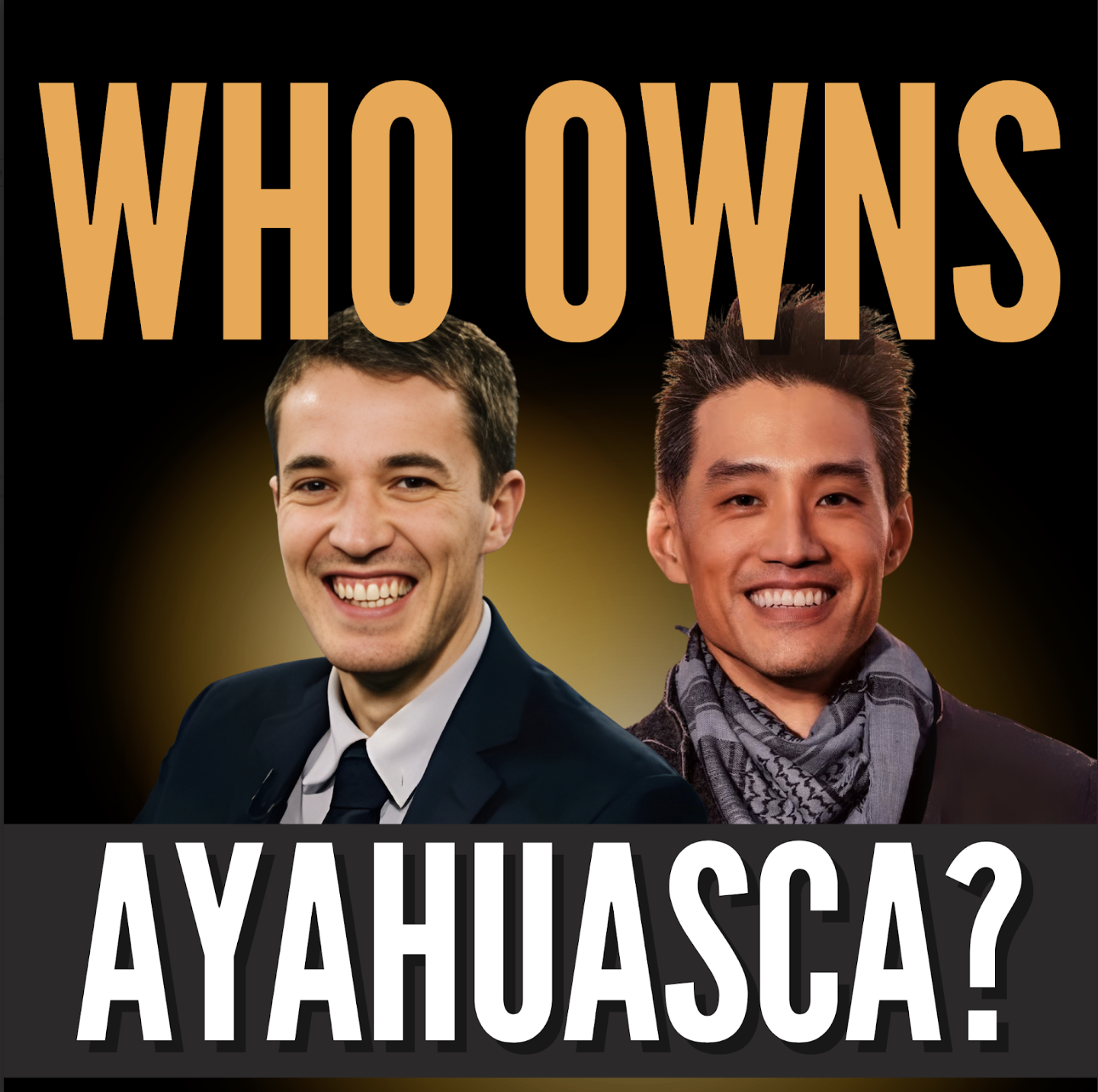
203 Ben Meeus: 5 Languages, One Mission: Defending Ayahuasca
This episode gives leaders a grounded look at what it takes to defend ayahuasca when culture, law, and power collide. Through “five languages, one mission,” Ben shows how indigenous consensus protects sovereignty under pressure and why listening across traditions is the discipline that keeps diplomacy clean and aligned. You’ll see how patents, commercialization, and legal risk quietly threaten the work, and why ethics have to be lived, not delegated, once authority enters the room. No romantic mysticism here, just real governance. Leadership means staying calm, humble, and precise while holding complexity without fragmenting. Practiced over time, this way of operating builds durable flow, steady authority, and mastery that holds when the mission matters most.


This episode gives leaders a grounded look at what it takes to defend ayahuasca when culture, law, and power collide. Through “five languages, one mission,” Ben shows how indigenous consensus protects sovereignty under pressure and why listening across traditions is the discipline that keeps diplomacy clean and aligned. You’ll see how patents, commercialization, and legal risk quietly threaten the work, and why ethics have to be lived, not delegated, once authority enters the room. No romantic mysticism here, just real governance. Leadership means staying calm, humble, and precise while holding complexity without fragmenting. Practiced over time, this way of operating builds durable flow, steady authority, and mastery that holds when the mission matters most.
Timestamps:
[00:00:00] Amazon Diplomacy, Not The UNBen reframes the Indigenous Ayahuasca Conference as a real diplomatic arena. Complex global issues are worked through in ceremony, where the medicine changes how people listen, speak, and relate to one another.
[00:03:30] 500+ Patents As A Warning SignalHe explains how the surge in ayahuasca-related patents points to accelerating commercialization. Pills, vapes, and products raise serious questions about ethics, benefit sharing, and indigenous sovereignty.
[00:08:00] A Council Takes ShapeA key outcome emerges: indigenous leaders commit to forming a formal council and a shared code of ethics, creating a unified voice for protection and policy engagement.
[00:12:30] Drink To Listen, Not To EscapeBen explains why the medicine is used during hard conversations. It sharpens attention, lowers ego, and reinforces respect, especially for non-indigenous participants who are there to listen unless invited to speak.
[00:16:30] Travel As A Legal RiskHe shares the reality of indigenous leaders traveling with their medicine. Border seizures, racial profiling, and prison risk are common, forcing extreme care, legal clarity, and ethical discipline.
[00:21:30] Consensus Or It Doesn’t MoveDecision making is simple and strict. If one person says no, it does not pass. Unity and dignity matter more than speed or majority rule.
[00:26:00] Conflict Without CollapseBen describes indigenous diplomacy in practice. Even after offense or disagreement, leaders return to the table. Allies bridge tensions across tribes and the group stays focused on what matters.
[00:31:00] Urgency Meets TraditionHe addresses the real tension. How do you honor slow, consultative traditions while responding to climate collapse and the rapid global spread of ayahuasca.
[00:36:00] A US Center With Legal GroundingBen explores a possible path forward. A religious freedom exemption model, similar to UDV precedent, that supports indigenous-led governance without taking control away.
[00:41:30] The Signal Of Real LeadershipAfter time with UN-level spiritual leaders, he names the common traits. Calm presence. Compassion. Heavy responsibility carried lightly. Authority without noise.
[00:45:30] Power Still Exists Behind The ScenesHe names the reality. Once leadership becomes institutional, politics shape what can be said and done, even in spiritual spaces.
[00:49:30] Pedestals And DiscernmentBen holds the tension clearly. Leaders are human and carry sacred responsibility. He contrasts indigenous leadership with non-indigenous scenes where money, sex, and power distort integrity.
[00:55:00] Why He Stepped Away From DaimeHe shares a turning point. Legal and ethical incoherence, VIP dynamics, and weak standards pushed him toward firmer boundaries and deeper alignment with indigenous leadership.
[01:02:30] Reciprocity That Actually LandsBen outlines an indigenous-led fund model. Communities submit proposals. Indigenous leaders decide allocations. Direct accountability instead of performative giving.
[01:07:30] A Path Bigger Than Personal GainHe answers the “one move” question. Ayahuasca for those genuinely called and prepared, paired with meditation, study, creative expression, disciplined rest, and the willingness to engage fully with life.
ACTION GUIDE: “5 Languages, One Mission—Defending Ayahuasca”
Overview: The guest reminds us that true leadership begins with deep listening, ethical clarity, and humility. When you slow down enough to see beneath the noise, you make wiser decisions that honor both your own growth and the communities you affect.
15-Minute Practical Exercise
“Perception Reset”
* Sit quietly for three minutes and exhale slowly.
* Bring to mind a current challenge or disagreement.
* Ask yourself: What am I not hearing? What am I not seeing?
* Write down three perspectives you hadn’t considered, including one that feels uncomfortable.This mirrors how indigenous leaders return to the table with clarity rather than reaction.
Daily Habit: Take one minute each morning to set an intention: Listen more than I speak.Throughout the day, pause before responding and ask yourself whether your next action reflects responsibility, respect, and clarity. Over time, this builds the inner steadiness the guest described in the leaders he’s worked with.
Reflection Question: Where in my life do I need more humility, and how would deeper listening change the outcome?
Motivational Quote: “Listen deeply, and the path reveals itself.”
Get full access to Infinite Flow at cklin.substack.com/subscribe
[00:00:00] Amazon Diplomacy, Not The UNBen reframes the Indigenous Ayahuasca Conference as a real diplomatic arena. Complex global issues are worked through in ceremony, where the medicine changes how people listen, speak, and relate to one another.
[00:03:30] 500+ Patents As A Warning SignalHe explains how the surge in ayahuasca-related patents points to accelerating commercialization. Pills, vapes, and products raise serious questions about ethics, benefit sharing, and indigenous sovereignty.
[00:08:00] A Council Takes ShapeA key outcome emerges: indigenous leaders commit to forming a formal council and a shared code of ethics, creating a unified voice for protection and policy engagement.
[00:12:30] Drink To Listen, Not To EscapeBen explains why the medicine is used during hard conversations. It sharpens attention, lowers ego, and reinforces respect, especially for non-indigenous participants who are there to listen unless invited to speak.
[00:16:30] Travel As A Legal RiskHe shares the reality of indigenous leaders traveling with their medicine. Border seizures, racial profiling, and prison risk are common, forcing extreme care, legal clarity, and ethical discipline.
[00:21:30] Consensus Or It Doesn’t MoveDecision making is simple and strict. If one person says no, it does not pass. Unity and dignity matter more than speed or majority rule.
[00:26:00] Conflict Without CollapseBen describes indigenous diplomacy in practice. Even after offense or disagreement, leaders return to the table. Allies bridge tensions across tribes and the group stays focused on what matters.
[00:31:00] Urgency Meets TraditionHe addresses the real tension. How do you honor slow, consultative traditions while responding to climate collapse and the rapid global spread of ayahuasca.
[00:36:00] A US Center With Legal GroundingBen explores a possible path forward. A religious freedom exemption model, similar to UDV precedent, that supports indigenous-led governance without taking control away.
[00:41:30] The Signal Of Real LeadershipAfter time with UN-level spiritual leaders, he names the common traits. Calm presence. Compassion. Heavy responsibility carried lightly. Authority without noise.
[00:45:30] Power Still Exists Behind The ScenesHe names the reality. Once leadership becomes institutional, politics shape what can be said and done, even in spiritual spaces.
[00:49:30] Pedestals And DiscernmentBen holds the tension clearly. Leaders are human and carry sacred responsibility. He contrasts indigenous leadership with non-indigenous scenes where money, sex, and power distort integrity.
[00:55:00] Why He Stepped Away From DaimeHe shares a turning point. Legal and ethical incoherence, VIP dynamics, and weak standards pushed him toward firmer boundaries and deeper alignment with indigenous leadership.
[01:02:30] Reciprocity That Actually LandsBen outlines an indigenous-led fund model. Communities submit proposals. Indigenous leaders decide allocations. Direct accountability instead of performative giving.
[01:07:30] A Path Bigger Than Personal GainHe answers the “one move” question. Ayahuasca for those genuinely called and prepared, paired with meditation, study, creative expression, disciplined rest, and the willingness to engage fully with life.
Human Rights Advocate
Ben Meeus, Belgian, holds a Master Degree in International and European Law (Cum Laude) from the Free University of Brussels, and a second Master Degree in Latin American Studies at the Centre for Latin American Research and Documentation (CEDLA) in Amsterdam. He has been involved in a variety of human rights causes related Indigenous Peoples and Minorities over the past 15 years and supported the work of Amnesty International and the United Nations High Commissioner for Human Rights (OHCHR). Committed to the protection of tropical rainforests and Indigenous Peoples rights, he served the United Nations Environment Programme (UNEP) by coordinating the implementation of the Interfaith Rainforest Initiative (IRI) in Brazil, Colombia, DRC, Peru and Indonesia.
Ben serves as an Advisor to the Yorenka Tasorentsi Institute (YTI) since 2018, when it was founded by internationally renowned political and spiritual leader of the Asháninka People, Benki Piyãko. YTI is a first-of-its-kind institute designed to integrate traditional knowledge with modern tools to address economic, social, and cultural issues in the Amazon region, and to develop replicable and scalable models for alternative development. In this position, Ben has guided and supported frontline strategy work for ecosystem restoration and Indigenous rights protection, as well as Benki’s international travels and speaking engagements.
Ben has also written a thesis, articles and contributed to a book chapter on the legal aspects related to the international expansion of the religious use of Ayahuasca. To t…Read More